


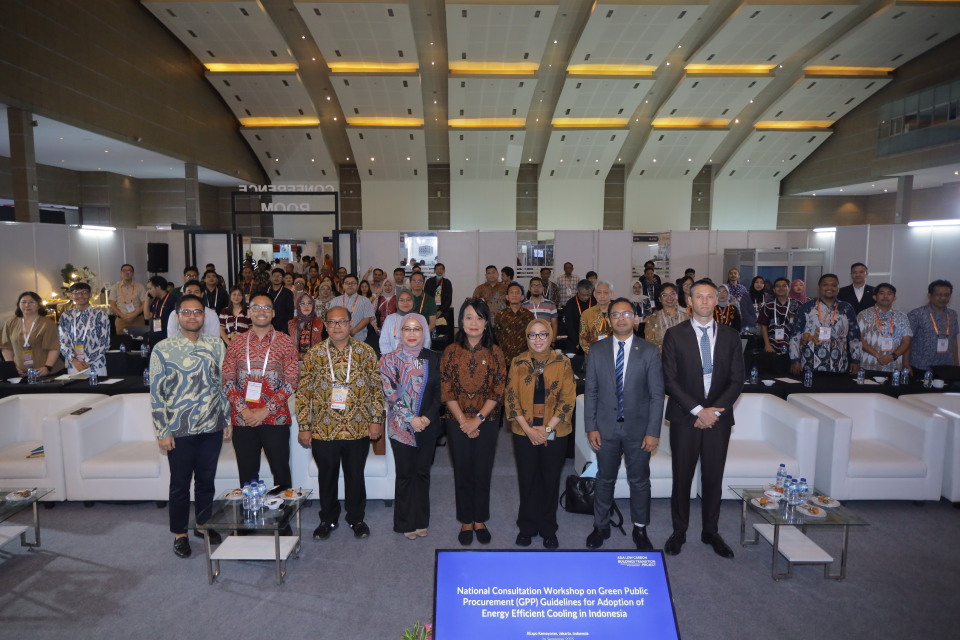
Photo 1. Group of photo of the participants – National Consultation Workshop on Green Public Procurement Guidelines for Energy Efficient Cooling in Indonesia
Credit: Asia Low Carbon Buildings Transition (ALCBT) Project
Jakarta, 26 September 2025 — The ASEAN Centre for Energy (ACE), Global Green Growth Institute (GGGI), and HEAT International, through the Asia Low-Carbon Buildings Transition (ALCBT) Project, in collaboration with ASHRAE Indonesia Chapter, with support from the International Climate Initiative (IKI), continue to accelerate the transition to low-carbon buildings in Southeast Asia and Indonesia through energy efficiency measures and collaboration with the Government of Indonesia.
The building sector in Indonesia currently contributes 33% of greenhouse gas emissions, with cooling use as the main contributor. At a series of dialogues held during Refrigeration & HVAC Indonesia Expo 2025 at the Jakarta International Expo on September 24th —26th , the Ministry of Public Works of Indonesia shared the government’s commitment to meeting resource efficiency performance targets in buildings operated by both the government and the private sector.

Photo 2. Ir. Diana Kusumastuti, M.T.,, Vice Minister of Public Works, Republic of Indonesia
Credit: Asia Low Carbon Buildings Transition (ALCBT) Project
“The building sector is one of Indonesia's largest contributors to emissions. This has become a serious concern for the Government in encouraging various stakeholders to support emission reduction. To accelerate emission reduction efforts, the Government is promoting stakeholder engagement through capacity-building programs and by assisting local governments in the implementation and certification of green buildings," said Ir. Diana Kusumastuti, M.T., Vice Minister of Public Works.
Co-hosted by the Ministry of Energy and Mineral Resources (MEMR) and the Ministry of Public Works (MPW), the event brought together 300 participants comprised of key stakeholders in the building sector, including government, building owners, financing institutions, and heating, ventilation, and air conditioning (HVAC) producers, to discuss Indonesia's efforts and progress towards a sustainable and low-carbon building future.
Prof. Dr. Eng. Eniya Listiani Dewi, Director General of NREEC at the Ministry of Energy and Mineral Resources, highlighted energy efficiency as a strategic and cost-effective measure to accelerate the energy transition and support Indonesia’s Net Zero Emission target. “Energy efficiency can contribute to reducing up to 37% of national emissions while delivering direct benefits to households through lower electricity bills and smarter technologies,” she stated.
She further emphasized the role of Green Public Procurement (GPP) in advancing the adoption of energy-efficient air conditioners in Indonesia. “By embedding efficiency criteria into procurement policies and ensuring efficient products are available in the national e-catalogue, we are not only sending a strong signal to the market but also helping households gain easier access to green technologies,” she added.

Photo 3. Prof. Dr. Eng. Eniya Listiani Dewi, Director General of New Renewable Energy and Energy Conservation, Ministry of Energy and Mineral Resources, Republic of Indonesia
Credit: Asia Low Carbon Buildings Transition (ALCBT) Project
Energy consumption in the buildings sector in ASEAN and Indonesia is mainly driven by the use of air conditioners due to the tropical climate and humidity levels. At the event, ACE introduced the Green Public Procurement Guidelines for energy-efficient air conditioners to strengthen market demand for efficient cooling solutions in Indonesia.'
ACE Executive Director Dato’ Ir. Ts. Razib Dawood said, "Green Public Procurement is a powerful tool for Southeast Asia’s low-carbon transition. By embedding efficiency into purchasing decisions—particularly for air conditioning, which accounts or the largest share of building energy use—governments can lead by example. This approach not only cuts emissions but also signals the market to innovate, encouraging producers and suppliers across the region to prioritize efficiency and sustainability in their products.” The ALCBT project aims to use the momentum from these dialogues to formulate key policy recommendations for the Government of Indonesia.
“From assessing the best available cooling technology to identifying enabling policies, these efforts are targeted at bolstering energy efficiency in the building sector through innovative approaches to drive down emissions,” said Rowan Fraser, GGGI Country Representative for Indonesia.Equally important was integrating life-cycle carbon assessment tools into decision-making.
Through capacity-building sessions on the Building Emissions Assessment Tool (BEAT) and training on natural refrigerants led by HEAT International, the programme aimed to raise awareness and build technical capacity among stakeholders to measure, manage, and reduce emissions across the building life cycle.Moving forward, ACE and ALCBT Consortium Partners remain committed to supporting Indonesia and ASEAN in their transition toward a sustainable built environment, ultimately achieving climate and sustainable development goals.
**
About ASEAN Centre for Energy (ACE)Established on 1 January 1999, the ASEAN Centre for Energy (ACE) is an intergovernmental organisation within the Association of Southeast Asian Nations’ (ASEAN) structure that represents the 10 ASEAN Member States’ (AMS) interests in the energy sector. ACE supports the implementation of the ASEAN Plan of Action for Energy Cooperation (APAEC), a blueprint for ASEAN energy sector. The Centre is guided by a Governing Council composed of Senior Officials on Energy from each AMS and a representative from the ASEAN Secretariat as an ex-officio member.The three key roles of ACE:
- As a catalyst to unify and strengthen ASEAN energy cooperation and integration by implementing relevant capacity building programmes and projects to assist the AMS develop their energy sector.
- As the ASEAN energy data centre and knowledge hub to provide a knowledge repository for the AMS.
- As an ASEAN energy think tank to assist the AMS by identifying and surfacing innovative solutions for ASEAN’s energy challenges on policies, legal & regulatory frameworks and technologies.
Hosted by the Ministry of Energy and Mineral Resources of Indonesia, ACE’s office is located in Jakarta, Indonesia. For more information on ACE, check our website: aseanenergy.org.For further information, please contact:
- Communications at ACE: [email protected]
About Asia Low Carbon Buildings Transition (ALCBT) Project The ALCBT Project is a five-year multi-stakeholder project that aims to facilitate the nationwide transition towards Low Carbon Buildings in five Asian countries: Cambodia, India, Indonesia, Thailand, and Vietnam. The ALCBT project will institutionalise the Building Carbon Assessment tools and approaches, build the capacity of public and private sector entities, and facilitate the mobilisation of financing for low-carbon building projects. Successful implementation of the project will substantially reduce direct GHG emissions from the building sector by 2028. The ALCBT project is being implemented by the Global Green Growth Institute (GGGI) and in partnership with HEAT International from Germany, Energy Efficiency Services Limited (EESL) from India, and ASEAN Centre for Energy (ACE). It is supported by the Government of Germany through its Federal Ministry for Economic Affairs and Climate Action (BMWK) under the International Climate Initiative (IKI).Subscribe to our newsletter here. Follow us on X | Facebook | LinkedIn | YouTube | InstagramFor further information on ALCBT, check our website: https://alcbt.gggi.org/


