


Photo 1. Group photo of participants at the Second PEEB ASEAN Steering Committee Meeting.
On 6 October 2026, the ASEAN Centre for Energy (ACE), together with the Agence Française de Développement (AFD), convened the Second Programme Steering Committee (PSC) Meeting of the Programme for Energy Efficiency in Buildings in ASEAN (PEEB ASEAN) at the Philippine International Convention Center (PICC) in Metro Manila, Philippines. Held alongside the 26th ASEAN Energy Business Forum (AEBF-26), the meeting reviewed programme implementation and discussed priorities for translating regional policy analysis into practical national support.
The meeting was chaired by Dr Pongpan Vorasayan, Director of the Energy Regulation and Conservation Division, Department of Alternative Energy Development and Efficiency (DEDE), Thailand, and Chair of the Energy Efficiency and Conservation Sub-Sector Network (EE&C-SSN) Focal Points. Opening remarks were delivered by Dr Pongpan, Mrs Victoire Vandeville, Regional Director of AFD, and Ms Naing Naing Linn, Head of the Energy Efficiency and Conservation Department at ACE.

Photo 2. Opening remarks by representatives of DEDE Thailand, AFD, and ACE.
Felix Ciosconara, Programme Manager of PEEB ASEAN at ACE, presented progress under Component 1, covering Policy Landscape Analysis, Digital Hub Enhancement, Regional Capacity Building, and National Enabling Activities. Key milestones included the Policy Consultative Workshop held in Bangkok on 25 June 2026, five AMS field visits, country consultations, and the preparation of the draft Policy Landscape Analysis findings. ACE also reported on initial discussions for the Digital Hub, preparations for an international study tour, and the result of joint assessment of seven national Pull Requests with AFD.
The proposed Year 2 work plan focused on applying the policy findings to capacity building and country-specific assistance. Priorities included finalising the policy review and gap analysis report for planned publication in January 2027, defining the Digital Hub’s scope and user needs, and preparing regional learning activities. Coordination between Components 1 and 2 remained a central consideration to connect policy improvements and technical capacity with building energy efficiency investment.

Photo 3. Felix Ciosconara, Programme Manager of PEEB ASEAN at ACE, presenting Component 1 progress and priorities.
Rashane Sala-Ngarm of AFD presented progress under Component 2 on Building Energy Efficiency Investment and Scaling-Up. The update covered support for the renovation of the Savannakhet Museum in Lao PDR, technical training institutes in Cambodia, and Cambodia’s national artificial intelligence laboratory. These projects illustrate how technical assistance and investment support can incorporate energy efficiency into public buildings across different sectors.
The presentation also highlighted challenges in identifying eligible projects, including small project sizes, limited recognition of energy efficiency as a productive investment, and opportunities identified after the concept design stage. These findings reinforced the importance of early project identification and coordination between national counterparts, ACE, and AFD.

Photo 4. Rashane Sala-Ngarm of AFD presenting the Component 2 investment facility and supported projects.
Sopin Wachirapuwadon, Policy Landscape Consultant, presented the draft assessment of building energy efficiency policies across the 11 AMS. The analysis examined regulatory frameworks, institutional arrangements, technical capacity, financing, and regional alignment to identify gaps and propose national enabling activities.
A central finding was that policy frameworks have advanced, while implementation capacity and measured building performance are in the needs of acceleration. Recurring gap among AMSs are: practical compliance tools, qualified practitioners, reliable building energy data, stronger verification systems, and better-prepared retrofit investment pipelines. The analysis distinguished between gaps requiring new or strengthened regulations and those requiring more effective implementation of existing requirements. Detailed discussions and validation of the findings and country-specific recommendations will continue through bilateral consultations with each AMS after the PSC meeting.
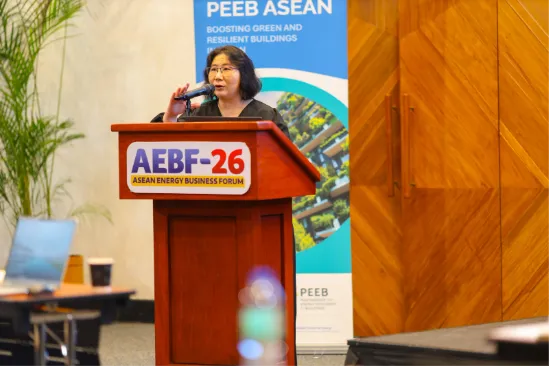
Photo 5. Sopin Wachirapuwadon presenting the Policy Landscape Analysis findings and proposed enabling activities.
The meeting also considered the complementary Push and Pull pathways under Output 1.4. The Push pathway translates findings from the Policy Landscape Analysis into programme-initiated national assistance, while the Pull pathway responds to requests submitted by AMS. The presentation identified Lao PDR and the Philippines as the first priorities for Pull support, covering building energy codes and compliance mechanisms in Lao PDR and tiered energy-conserving design for residential housing in the Philippines. Indonesia and Thailand were identified as potential subsequent priorities, subject to further clarification.

Photo 6. Participants discussing national support priorities and proposed regional activities.
The meeting concluded with closing remarks from Ms Naing Naing Linn. The next phase will focus on bilateral validation of policy findings, refinement of national support activities, and further development of the capacity building activities and design competition. Through continued cooperation among ACE, AFD, and AMS, PEEB ASEAN seeks to turn policy analysis into stronger implementation capacity and practical investment opportunities for more energy-efficient and resilient buildings across the region.


