


Photo 1. PEEB ASEAN session at AEBF-26.
(Source: 26th ASEAN Energy Business Forum)
Manila, 5 October — The ASEAN Centre for Energy, through the Programme for Energy Efficiency in Buildings in ASEAN (PEEB ASEAN) programme, hosted the parallel session titled “Preserving Heritage, Reducing Energy Costs: Investing in Passive Cooling Solutions” at the 26th ASEAN Energy Business Forum (AEBF-26) in Manila, Philippines. The discussion explored why banks should invest in building energy efficiency projects, using the Savannakhet Provincial Museum in Lao PDR as a case study.
Supported by PEEB ASEAN, the renovation of the Savannakhet Provincial Museum in Lao PDR connects a local heritage project with a question relevant to banks and development finance institutions across the region: how can the potential of energy-efficient buildings become an opportunity that financiers can assess with confidence?
The project combines passive cooling, efficient fans, and targeted humidity control across four heritage buildings. Its study estimates electricity consumption up to 67% lower than an air-conditioned alternative, offering a compelling reason to look more closely at the investment behind the design.

Photo 2. Existing conditions of Savannakhet Museum
(Source: Agence Française de Développement (AFD), 2026)


Photo 3. Proposed design for Savannakhet Museum renovation.
(Source: Asmo Architects)

Photo 4. Andéol Cadin presenting the renovation project at AEBF-26
(Source: 26th ASEAN Energy Business Forum)
The investment begins with reducing demand

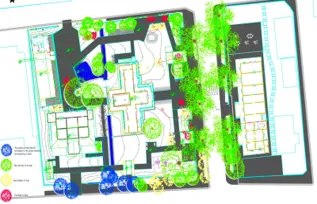

Photo 5. Existing situations and building components in Savannakhet Museum
(Source: Andeol Cadin, 2026)
At Savannakhet, existing trees and additional window shading will limit solar exposure. Roof insulation and ventilation will reduce heat gain, while louvres and efficient ceiling fans will support airflow and comfort. Together, these measures underpin a design that avoids air conditioning across the four heritage buildings.

Table 1. Energy Design Scenarios, comparing active cooling mechanism alternatives applied in the museum
(Source: Solener, 2026)
The financial relevance lies in the operating costs these choices could avoid. The study presented during the session estimates annual electricity use of approximately 24,000 kWh, compared with around 73,000 kWh for an air-conditioned alternative. That difference of approximately 49,000 kWh (67%) per year shows why decisions about the building envelope deserve attention alongside investments in equipment.
Turning this technical potential into a financial assessment requires linking expected consumption to electricity tariffs, capital expenditure, maintenance, and equipment replacement. The 67% figure is a modelled comparison between design options; actual performance will need to be verified after completion. That verification will help establish whether the expected operating benefits hold up in everyday use.
Value that extends beyond the electricity bill
For a public museum, the investment also has to support the service the building provides. The design study indicates that the proposed passive cooling measures could substantially improve thermal comfort for visitors and staff, with the proportion of opening hours meeting the study's comfort criteria increasing nearly threefold compared with existing conditions. A more comfortable museum can better serve its visitors and staff while continuing to care for its collections.

Photo 6. Showcase’s existing condition at Savannakhet Museum.
(Source: Agence Française de Développement (AFD), 2026)
Those collections require a more targeted approach to humidity. Airtight showcases with silica gel and sensors will protect sensitive artefacts, while a secured storage room will use controlled dehumidification. An 8 kWp solar canopy and backup arrangements will support essential operation during power interruptions. Drainage improvements and permeable pathways will help manage rainwater and reduce flood risks.
Seen together, these measures broaden the assessment from energy consumption to the resilience and usefulness of the asset. For development finance institutions, heritage conservation, comfort, and continuity of public service can strengthen the rationale for support. For lenders assessing comparable projects, the task is to distinguish these wider benefits from financial savings and identify a dependable repayment source.
Connecting one project to a wider opportunity
Savannakhet is a grant-supported public building project, providing an opportunity to implement the measures and build an operating record. Its value for future financing will grow as design estimates can be compared with measured results. Once that evidence is available, the next question is how to apply it beyond a single site. Buildings with comparable retrofit needs could be assessed using common methods and monitoring requirements. Bringing suitable projects into a portfolio could reduce repeated preparation work and create a scale more practical for financing, supported by clear ownership, procurement, and repayment arrangements.
PEEB ASEAN helps connect these project-level lessons with regional action. Implemented by the ASEAN Centre for Energy (ACE) and Agence Française de Développement (AFD), with AFD funding, the programme combines policy support, knowledge sharing, capacity building, and national enabling activities with technical and financial support for pilots.
For banks and development finance institutions, Savannakhet offers an opportunity to follow how an energy-efficient renovation moves from design to operation. The results can help identify which measures merit replication, what support future projects need, and how their benefits can be assessed. A museum built to preserve the past could, in this way, help inform the next generation of building investments across ASEAN.
ENCLOSURE:


